
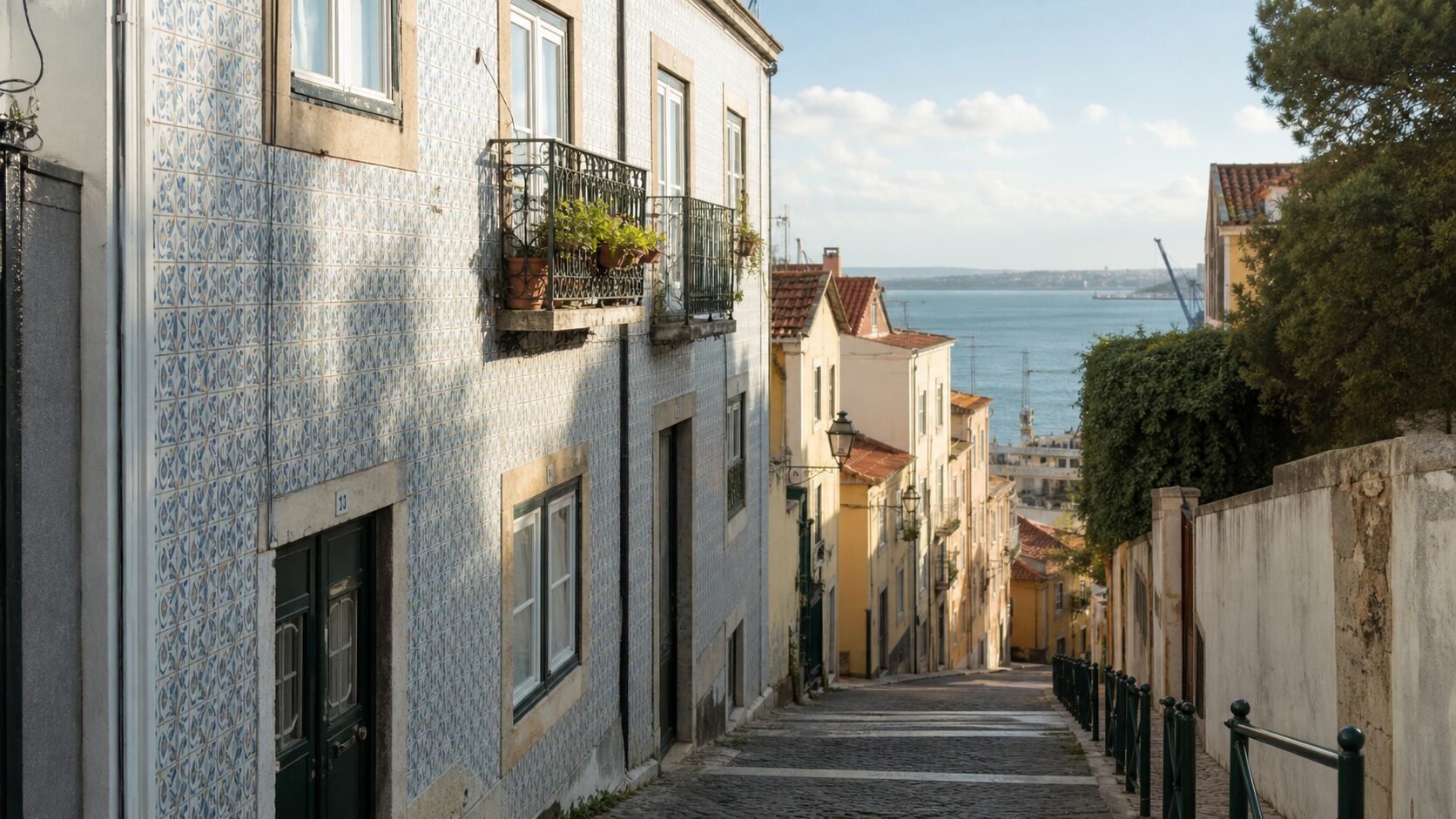
Thinking about moving to Portugal? You are not alone. Portugal often shows up on shortlists for Americans exploring life abroad because it offers a mix of European lifestyle, Atlantic coastline, historic cities, smaller towns, remote-work appeal, and a slower pace than many people are used to in the United States.
But Portugal is not a magic fix, and it is not one single lifestyle. Lisbon, Porto, the Algarve, Madeira, the Azores, and smaller inland towns can feel very different from each other. Before you fall in love with a few photos or social media videos, it helps to slow down and ask a better question: would Portugal actually fit the life you are trying to build?
This starter guide is designed to help you think through the basics before you go deep on visas, taxes, housing, healthcare, and logistics.

If you are still organizing the overall process, start with the How to Move Abroad guide before narrowing your destination research.
Quick take: who Portugal may fit
Portugal may be worth researching if you want:
- A European base with a slower daily rhythm
- Access to cities, coastlines, smaller towns, and islands
- A country that remote workers and digital nomads often research
- A place where climate and lifestyle vary by region
- A move that requires real planning, but may feel more approachable than some alternatives
Portugal may be a weaker fit if you need:
- A very low-friction housing market in the most popular areas
- A guarantee that your current U.S. job can legally continue abroad
- A move with no tax, visa, or residency complexity
- A country where you can ignore language learning entirely
- A destination that feels the same in every region
At a Glance
| Factor | Portugal snapshot |
|---|---|
| Cost of living | Moderate to high in Lisbon and Porto, more manageable elsewhere |
| Ease for Americans | Moderate, especially for short visits, but longer stays still need paperwork |
| Language barrier | Moderate, lower in tourist areas and higher in daily admin outside them |
| Healthcare access | Strong in major cities, more mixed in smaller areas |
| Climate variety | Strong, from Atlantic coast to warmer south and island climates |
| Remote-work practicality | Strong if your work setup and visa path fit |
| Family appeal | Moderate, depending on school, housing, and pace of life |
| Retirement appeal | Strong for many people, especially if they want structure and climate |
| Distance from the United States | Far, but still manageable with good flight planning |
| Main tradeoff | Residency, housing pressure, and the need to plan beyond the postcard version of Portugal |
Why Portugal is popular with people considering life abroad
Portugal has a strong “maybe I could actually do this” appeal. It is in Europe, has Atlantic access, and offers different versions of daily life depending on where you land. Some people are drawn to Lisbon or Porto for city life. Others look at the Algarve for sunshine and beaches, or Madeira and the Azores for island life.
The country itself includes mainland Portugal plus the autonomous regions of Madeira and the Azores, which matters because climate, transportation, housing, and lifestyle can vary significantly depending on where you are researching. Portugal UN Mission
That variety is part of the appeal, but it is also why “moving to Portugal” is too broad as a final plan. A better early goal is to compare regions and lifestyles inside Portugal before deciding whether it belongs on your shortlist.
Remote work and income questions
If you are a remote worker, Portugal may look especially attractive, but this is where you need to be careful. Working remotely from another country is not just a lifestyle choice. It can involve immigration status, employer permission, tax residency, payroll issues, benefits, data security, and whether your work is legally allowed from abroad.
Portugal’s official Portuguese national visa information includes temporary-stay and residency visa categories for remote work, often described as digital nomad visas. The official temporary-stay visa documentation also lists income proof requirements based on a minimum value equivalent to four monthly minimum guaranteed remunerations.
That does not mean every remote worker automatically qualifies. It means Portugal has specific pathways worth researching if your income, work structure, documents, and plans fit the requirements. Your employer may also have rules that are separate from immigration rules.
Before putting Portugal on your serious shortlist, ask:
- Does my employer allow international remote work?
- Can I work from Portugal legally under the right visa or residence status?
- Would my role create payroll, tax, security, or compliance problems?
- Do I have income documentation that matches visa expectations?
- Am I planning a short stay, a long stay, or possible residency?
If you have not read it yet, Can I Really Work Remotely From Another Country? is a useful companion before you build your shortlist.
Visa and residency reality check
Portugal has several national visa categories, and the right path depends on why you are moving, how long you plan to stay, how you earn income, and whether you intend to seek residency. The official Portuguese visa portal distinguishes between temporary-stay visas and residency visas, including categories for remote work, independent work, subordinate work, study, and other purposes. The residency visa documentation is the place to start.
For Americans, it is important not to confuse visiting with moving. A tourist stay is not the same thing as permission to live and work in Portugal. If Portugal becomes a serious option, your next step should be to confirm the current rules through official Portuguese sources, the appropriate consulate or visa center, and a qualified professional if your situation is complicated.
Portugal may be a good research candidate if you are organized enough to gather documents, compare visa categories, and verify requirements carefully. It may not be a good fit if you are hoping to just show up and figure it out later.
The Visa Reality Check: Why You Can’t Pick a Country on Vibes Alone is also worth reading before you assume the logistics will be simple.
Cost of living: look beyond the headline
Portugal is often described as more affordable than many parts of the United States, but that statement can be misleading without context. The real question is not “Is Portugal cheap?” The better question is “Would my actual lifestyle, housing needs, income, and location choice work there?”
Popular areas can behave very differently from smaller towns. Lisbon and Porto are not the same as inland communities. Coastal lifestyle, car needs, school needs, healthcare access, coworking availability, and proximity to airports can all affect your real monthly budget.
Before comparing Portugal to your current life, map out:
- Rent or housing expectations
- Utilities and internet
- Groceries and eating out
- Transportation and whether you need a car
- Health insurance or healthcare costs
- Flights back to the United States
- Visa and legal paperwork costs
- Taxes and professional advice
- Emergency savings
- Currency changes and exchange-rate risk
A MoveMap-style comparison should start with your real life, not someone else’s “I live here for X per month” video.
Climate and daily comfort
Portugal’s climate is one of the reasons many people put it on their list, but it is still worth researching carefully. IPMA climate normals are useful because Portugal has meaningful regional and seasonal variation.
Do not assume the whole country feels like the same sunny postcard. The north, south, coast, interior, mountains, Madeira, and Azores can all create different comfort questions. Some areas may be wetter, windier, hotter, cooler, quieter, more seasonal, or more car-dependent than you expect.
Ask yourself:
- Do I handle summer heat well?
- Do I want coastal weather or inland affordability?
- Would winter dampness bother me?
- Do I need air conditioning or heating to be comfortable?
- Do I want city access, beach access, or quiet?
- How important is year-round outdoor life?
Climate is not just weather. It affects mood, routines, housing quality, energy bills, transportation, and how often you actually live the life you imagined. For a broader decision lens, read Climate, Comfort, and Daily Life: What People Forget Before Moving Abroad.
Healthcare and insurance questions
Portugal has a public healthcare system, but your access depends on your legal status and registration. Official Portugal healthcare information for migrants says legally resident foreigners can obtain a National Health Service, or SNS, user number, which allows access to medical assistance at public SNS units.
That is encouraging, but it does not mean you should move without understanding the details. Many people also consider private insurance, especially during transitions, visa applications, or while waiting to complete residency and registration steps.
Research these questions early:
- What health insurance is required for your visa or stay?
- When would you be eligible to access public healthcare?
- How do you register for an SNS user number?
- Would you want private insurance too?
- Are your prescriptions available in Portugal?
- Do you need English-speaking providers?
- How close would you be to clinics, hospitals, or specialists?
Healthcare can be a major quality-of-life factor, especially for families, retirees, people with ongoing prescriptions, or anyone managing a chronic condition.
Money, taxes, and paperwork basics
Moving to Portugal can involve more paperwork than people expect. If you live and work in Portugal, you may need to deal with tax registration and social security registration depending on your situation. Portugal’s government information for migrants says foreign citizens who want to live and work in Portugal need to register with the Finance Department and Social Security.
Portugal also has a taxpayer identification number called a NIF. Official Portuguese NIF information explains that Portuguese nationals and foreign nationals, resident or non-resident, can apply for a NIF when they need to comply with tax obligations or exercise rights before the Portuguese tax administration.
For planning purposes, put these on your research list:
- NIF
- Bank account
- Proof of accommodation
- Visa documents
- Health insurance
- Tax residency
- U.S. tax filing obligations
- Social security or self-employment requirements
- Driver’s license rules
- Phone plan and local address needs
This is where Portugal can shift from dreamy to real very quickly. That is not a reason to avoid it. It is a reason to plan properly.
Safety and travel awareness
Portugal is generally viewed as a practical destination for many travelers and movers, but safety should still be checked through current official sources. The U.S. State Department Portugal travel advisory includes information on entry and exit requirements, safety and security, health, transportation, local laws, and other travel guidance for U.S. citizens.
Do not rely only on expat groups or travel videos for safety decisions. Look at official advisories, local news, neighborhood-level information, transportation needs, and your own risk tolerance.
Useful safety questions include:
- What neighborhoods fit your lifestyle and comfort level?
- How will you get around at night?
- Are you relying on public transportation, walking, rideshare, or a car?
- How comfortable are you dealing with bureaucracy in another language?
- What would you do in a medical, legal, or family emergency?
- How close are you to an airport if you need to return to the United States quickly?
Best places in Portugal to research first
This guide is not ranking cities, and you should avoid choosing a place based only on popularity. But these areas often come up in early research:
Lisbon
Lisbon may appeal if you want a larger city, international energy, coworking options, restaurants, culture, public transit, and airport access. The tradeoff is that popular city life can come with more competition for housing and higher costs than smaller areas.
Porto
Porto may appeal if you want city life with a different pace and feel than Lisbon. It is often researched by people who want culture, walkability, and access to northern Portugal. Weather, housing, and neighborhood fit should be researched carefully.
Algarve
The Algarve may appeal if you are drawn to sunshine, beaches, and a more relaxed pace. It can be especially attractive to retirees, families, and lifestyle-focused movers. The tradeoffs may include seasonality, transportation needs, and differences between tourist areas and year-round communities.
Madeira
Madeira may appeal if you are interested in island life, nature, and a remote-work-friendly lifestyle. Island living can also mean different logistics, flight considerations, and a different sense of distance from mainland Europe.
Azores
The Azores may appeal if you want nature, quiet, and island life with a very different feel from mainland Portugal. It may be less ideal if you need constant big-city access or frequent international travel.
Smaller towns and inland areas
Smaller towns can be appealing for people looking for quieter, potentially more affordable daily life. The tradeoffs may include transportation, language, fewer international services, and less built-in expat infrastructure.
What to research before you choose Portugal
Before you decide Portugal is “the one,” use this checklist:
- Can I legally stay for the length of time I want?
- Can I legally work or earn income there?
- Does my employer allow this?
- What visa or residence path fits my situation?
- What documents would I need?
- What is my realistic monthly budget by region?
- What happens to my U.S. mail, banking, phone, insurance, and taxes?
- Would I need a car?
- What healthcare access would I have?
- What climate and housing quality do I actually need?
- How much Portuguese am I willing to learn?
- What would make me come back home?
That last question matters. A good move-abroad plan includes an exit plan.
Portugal may be a good shortlist country if…
Portugal may deserve deeper research if:
- You want a European lifestyle and are willing to deal with paperwork
- You can document stable income or a qualifying reason to stay
- You are open to comparing regions instead of picking Lisbon by default
- You want a slower pace but still need infrastructure
- You are willing to verify visa, tax, healthcare, and work rules carefully
- You are comfortable starting with research before making emotional decisions
Portugal may not be the right fit if…
Portugal may not be ideal if:
- You need a completely simple move
- You cannot meet visa or income documentation requirements
- Your employer will not allow international remote work
- You need very low housing costs in the most popular areas
- You expect everything to work like the United States
- You are not willing to learn any Portuguese
- You want to avoid taxes, paperwork, or professional advice
First 7-day Portugal research plan
If Portugal is on your shortlist, do not start by watching another dozen “why I moved to Portugal” videos. Start with a structured research sprint.
Day 1: Pick your reason
Write down why Portugal interests you. Be specific. Lower cost of living, climate, safety, Europe access, healthcare, slower pace, remote work, and family lifestyle are all different goals.
Day 2: Choose three regions to compare
Pick three places inside Portugal that might fit different versions of your life. For example: Lisbon, Porto, and a smaller town. Or Algarve, Madeira, and an inland city.
Day 3: Check work permission
Review whether your job, business, or freelance income could legally and practically continue from Portugal.
Day 4: Review visa paths
Look at official visa categories and note which ones might apply. Do not assume social media names for visas are enough.
Day 5: Build a rough budget
Compare housing, utilities, transportation, health insurance, taxes, flights, and emergency savings.
Day 6: Research daily life
Look at climate, walkability, language, grocery access, healthcare access, schools if relevant, and transportation.
Day 7: Decide your next question
At the end of the week, do not decide whether you are moving. Decide what you still need to know.
Bottom line
Portugal can be a strong country to research if you are serious about moving abroad, especially if you want a European base, regional variety, and a lifestyle that may feel calmer than what you have now.
But it is not a shortcut around planning. The right question is not “Is Portugal the best country to move to?” The better question is “Does Portugal fit my income, work situation, visa path, healthcare needs, climate preferences, and actual daily life?”
Start there. Then build your shortlist with a clearer head.
If you want a next step, take the move abroad quiz, explore the MoveMap Toolkit, and browse more country guides.